

Request an Appointment or Give us a call
What is Complex Primary Hip Replacement?
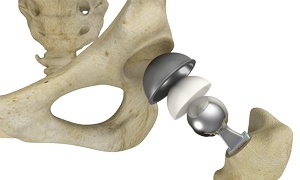
Primary hip replacement or hip arthroplasty is a surgical procedure in which the worn out or damaged parts of the hip joint are removed and replaced with artificial components called prostheses or implants that are made of metal, plastic, or ceramic.
Complex primary total hip replacement is defined as a primary total hip replacement surgery performed on patients with comorbidities and compromised soft-tissue or bony conditions, including but not limited to skeletal dysplasia, dysplastic hip, prior hip fracture, ankylosed hip, obesity, acetabular protrusion, certain neuromuscular conditions, and previous bony procedures concerning the hip. In a complex primary total hip replacement, complications and challenges are significantly higher than a standard primary hip replacement, thus warranting possible use of modular and customized implants and/or bone grafts, along with preoperative, intraoperative, and postoperative management to overcome these significant surgical challenges.
What is Anatomy of the Hip?
The hip joint is one of the body's largest weight-bearing joints and is the point where the thighbone (femur) and pelvis (acetabulum) join. It is a ball-and-socket joint in which the head of the femur forms the ball, and the pelvic acetabulum forms the socket. The joint surface is covered by smooth articular cartilage that cushions and enables smooth movement of the joint. The bones are held together by bands of tissue called ligaments that provide stability to the joint.
What are the Indications for Complex Primary Hip Replacement?
Some of the conditions involving the hip joint that would be considered a complex primary hip replacement surgery include:
- A combination of abnormal bony anatomy, bone loss, and compromised soft tissues
- Severe arthritic conditions, such as osteoarthritis, rheumatoid arthritis, and post-traumatic arthritis of the hip joints
- Severe hip injury or hip fracture
- Prosthetic joint infection
- Significant hip joint pain that limits your daily activities, such as walking, bending, getting up from a chair, or climbing stairs
- Significant stiffness in the hip due to joint degeneration, limiting movement
- Gross hip instability due to tearing or stretching of ligaments
- Hip fracture that has healed in a deformed or malunited position
- Failure of conservative treatment modalities to alleviate hip symptoms
In these circumstances, a complex total hip replacement involves a variety of features, such as utilizing more complex prosthetic parts with longer stems to ensure the component is securely fitted in the cavity to provide more stability. In addition, appropriate plastic liners, bone grafting, and customized components are often used to ensure proper alignment, replace absent bone stock, and adequately restore the ligaments and other soft tissue structures for a successful outcome.
How is Complex Primary Hip Replacement Surgery Performed?
Complex primary hip replacement is usually performed as an open surgery under regional or general anesthesia and involves the following steps:
- After adequately sterilizing the surgical area, your surgeon makes a long incision over the hip joint.
- The supporting structures of the hip are gently moved aside to access the joint area.
- Your surgeon will evaluate the joint area for any soft-tissue infection, joint damage, or prosthetic damage to determine which prosthetic parts have worn out or loosened or shifted out of position.
- If the previous prosthesis is in a bad shape, then your surgeon will carefully remove the original prosthesis, taking care to preserve as much bone as possible and any bone cement from a previous hip replacement.
- If the articulating bones have been damaged with severe arthritis or other bone conditions, then your surgeon will trim the damaged portions from the joint surfaces at appropriate angles to ensure a perfect fit of the new implant.
- Once the original prosthesis and/or damaged bone parts are removed, your surgeon will prepare the bone surfaces appropriately to insert specifically sized new prosthetic components into your hip joint, to be secured with bone cement or screws.
- In some cases, the bone graft material may be used to aid in rebuilding the hip joint to ensure the customized implants fits solidly into the hip joint.
- With the new components in place, the hip joint is tested through its range of motion.
- All surrounding tissues and structures are restored to their normal anatomic positions.
- Finally, the incision is closed with sutures and sterile dressings are applied.
What Does Postoperative Care for Complex Primary Hip Replacement Involve?
In general, postoperative care instructions and recovery after complex primary hip replacement may involve the following:
- You will be transferred to the recovery area where your nurse will closely observe you for any allergic/anesthetic reactions and monitor your vital signs as you recover.
- Most patients may need to stay in the hospital for 2 to 3 days before discharge to home.
- You may notice pain, swelling, and discomfort in the hip area. Pain and anti-inflammatory medications are provided as needed for comfort.
- You will be placed on assistive devices such as crutches with instructions on restricted weight-bearing for a specified period of time. You are encouraged to walk with assistance as frequently as possible to prevent blood clots.
- Instructions on surgical site care and bathing will be provided to keep the wound clean and dry.
- Refrain from strenuous activities for the first few months and lifting heavy weights for at least 6 months. A gradual increase in activities over a period of time is recommended.
- An individualized physical therapy protocol will be designed to help strengthen hip muscles and optimize hip function once you are off crutches.
- Most patients are able to resume their normal activities in 3 to 4 weeks after surgery; however, return to sports may take at least 6 months or longer.
- Refrain from driving until you are fully fit and receive your doctor’s consent.
- A periodic follow-up appointment will be scheduled to monitor your progress.
What are the Risks and Complications of Complex Primary Hip Replacement?
Complex primary hip replacement is a relatively safe procedure; however, as with any surgery, some risks and complications may occur, such as the following:
- Infection
- Bleeding
- Damage to nerves and vessels
- Blood clots in the legs or lungs
- Anaesthetic/allergic reactions
- Continued pain or stiffness
- Failure of the bone graft
- Implant failure
- The need for revision surgery
If you wish to be advised on the most appropriate treatment, please call to schedule an appointment or click to request an appointment online.